A damaged chimney is more than a cosmetic concern. Cracked bricks, deteriorating mortar, water damage, and structural movement can allow moisture into your home and cause increasingly expensive problems.
But how do you know whether your chimney needs a simple repair or a complete rebuild?
Understanding the difference can help you address problems before they become more serious. Experienced masonry contractors in MA can inspect the chimney, identify the source of the damage, and recommend the most appropriate solution based on its condition.
When Does a Chimney Need Repair?
Many chimney problems can be corrected without rebuilding the entire structure. Chimney repair is generally appropriate when the damage is localized and the chimney remains structurally sound.
Common problems that may be repairable include:
- Cracked or deteriorating mortar joints
- A small number of damaged bricks
- Minor water intrusion
- Loose or spalling bricks
- Small cracks in the chimney crown
- Deteriorated flashing around the chimney
- Early signs of mortar erosion
For example, deteriorating mortar joints may require tuckpointing or repointing. This process removes damaged mortar and replaces it with new mortar, helping restore the strength and weather resistance of the masonry.
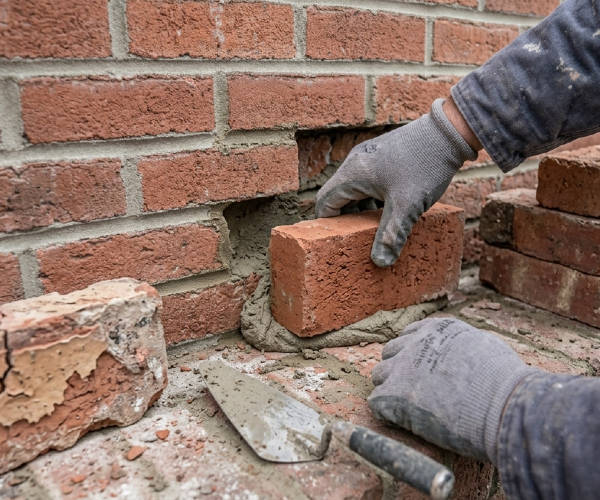
Individual damaged bricks can also often be removed and replaced without disturbing the rest of the chimney.
The key is addressing these problems early. Small masonry defects can allow water to penetrate the chimney, where repeated freezing and thawing can accelerate deterioration.
When Should You Consider a Chimney Rebuild?
A chimney rebuild may be necessary when damage is extensive or the structure has become unstable.
A professional inspection may reveal problems such as:
- Significant structural cracks
- A chimney that is leaning or shifting
- Extensive brick deterioration
- Large areas of failing mortar
- Major water damage
- Separation between the chimney and the house
- Extensive spalling throughout the chimney
- A damaged chimney structure that cannot be safely repaired
In some cases, only the upper portion of the chimney may need to be rebuilt. This is often referred to as a partial chimney rebuild.
A complete rebuild is generally considered when deterioration extends throughout the chimney or the existing structure can no longer provide adequate stability.
The right solution depends on the extent, location, and cause of the damage.
Masonry Contractors in MA: Repair or Rebuild?
If you are unsure whether your chimney needs repair or rebuilding, the safest approach is to have it professionally evaluated.
Experienced masonry contractors in MA can examine the chimney for visible deterioration and structural warning signs. They can then determine whether localized repairs are sufficient or whether rebuilding is the more appropriate long-term solution.
A professional evaluation should consider more than just the visible damage. A chimney may look acceptable from the ground while having deteriorated mortar, hidden cracks, or water-related damage in less visible areas.
The inspection can help answer important questions:
- Is the chimney structurally stable?
- How extensive is the brick deterioration?
- Are the mortar joints still providing adequate support?
- Is water entering through the chimney?
- Is the chimney crown or flashing damaged?
- Is the problem localized or widespread?
Getting these questions answered before starting work can prevent unnecessary repairs and help you choose a solution that addresses the underlying problem.
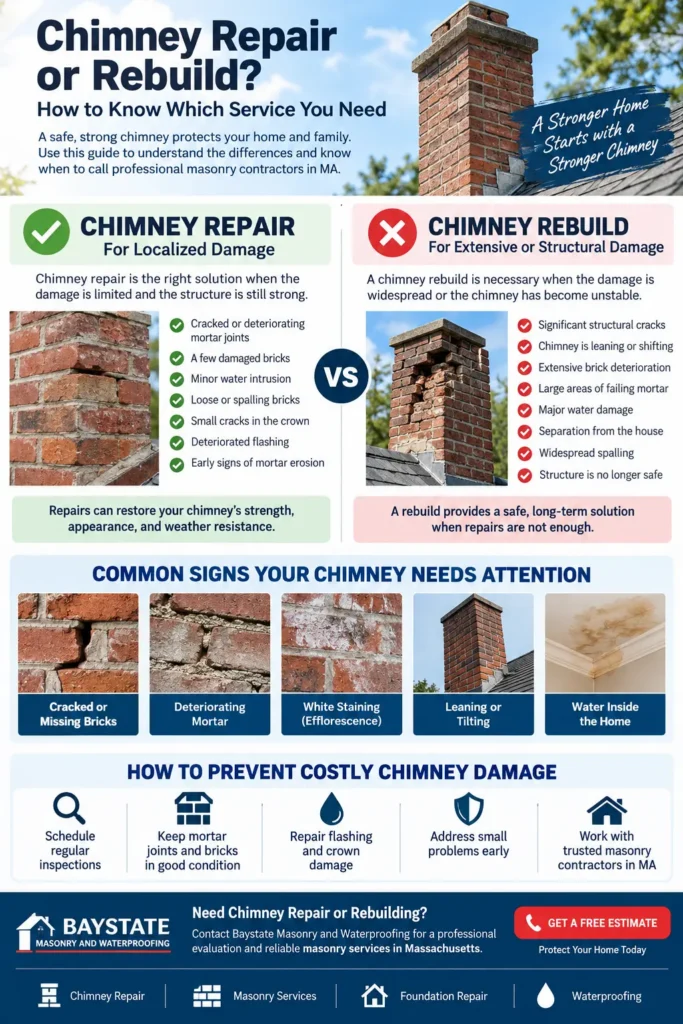
Common Signs Your Chimney Needs Attention
Homeowners should not wait until bricks begin falling from the chimney before scheduling an inspection.
Watch for signs such as:
Cracked or Missing Bricks
Damaged bricks can allow water to enter the masonry. If multiple bricks are cracked, loose, or missing, the damage should be evaluated promptly.
Deteriorating Mortar
Mortar joints that are crumbling, recessed, or visibly damaged can weaken the masonry over time. Repointing may be appropriate when deterioration is limited to the mortar joints.
White Staining
White deposits on chimney masonry can indicate moisture movement through the brick. While not every stain indicates severe structural damage, recurring efflorescence is a reason to investigate the source of moisture.
Leaning or Tilting
A chimney that appears to be leaning is a significant warning sign. Structural movement can indicate a problem that requires more than surface-level masonry repair.
Water Inside the Home
Water stains near the chimney, damp areas around the fireplace, or moisture in the attic can indicate problems with the chimney, flashing, crown, or surrounding roofing system.
How to Prevent Costly Chimney Damage
Regular maintenance can help extend the life of chimney masonry.
Homeowners should consider having the chimney inspected when there are visible warning signs or whenever maintenance concerns arise. Keeping mortar joints, bricks, flashing, and the chimney crown in good condition can help limit water intrusion.
Professional maintenance may include:
- Brick replacement
- Mortar repointing
- Tuckpointing
- Chimney crown repair
- Masonry restoration
- Chimney waterproofing
- Structural masonry repairs
These services are part of the broader range of masonry services in Massachusetts available for residential properties.
You can learn more about available masonry services in Massachusetts and the types of masonry work that can help protect and restore your home.
Why Professional Chimney Evaluation Matters
Chimney masonry is exposed to rain, snow, ice, temperature changes, and repeated freeze-thaw cycles. Over time, these conditions can contribute to deterioration.
Choosing between repair and rebuilding based only on what is visible from the ground can result in an incomplete solution.
A qualified masonry professional can assess the condition of the structure and recommend repairs based on the actual extent of deterioration.
The goal should not simply be to make the chimney look better. The repair should address the underlying masonry problem and help protect the structure from continued deterioration.
Frequently Asked Questions
Can a cracked chimney be repaired?
Yes, depending on the location and severity of the cracks. Minor masonry cracks may be repairable, while significant structural cracking may require more extensive work or rebuilding.
How do I know if my chimney needs to be rebuilt?
A chimney may require rebuilding when there is extensive brick or mortar deterioration, structural instability, leaning, or widespread damage that cannot be effectively addressed with localized repairs.
Is chimney repointing the same as rebuilding?
No. Repointing involves removing deteriorated mortar and replacing it with new mortar. Rebuilding involves removing and reconstructing part or all of the masonry structure.
How often should a chimney be inspected?
The appropriate inspection frequency depends on the chimney’s age, condition, construction, and exposure to weather. If you notice cracks, loose bricks, water damage, or other changes, have it evaluated rather than waiting for the problem to worsen.
Should I repair my chimney before selling my home?
If the chimney has visible masonry damage, addressing it before selling can help prevent the issue from becoming a concern during a buyer’s inspection. A professional evaluation can help determine what work is actually necessary.
Need Chimney Repair or Rebuilding in Massachusetts?
If your chimney has cracked bricks, deteriorating mortar, water damage, or signs of structural movement, do not wait for the problem to become more expensive.
Baystate Masonry and Waterproofing provides professional masonry solutions for homeowners throughout Massachusetts. Contact the team for an evaluation and find out whether your chimney needs targeted repairs, masonry restoration, or a more extensive rebuild.