Basement wall cracks are common in Massachusetts homes, especially older properties exposed to seasonal temperature changes, heavy rain, snow, and freeze-thaw cycles. While some cracks are minor, others can indicate water intrusion or a more serious foundation problem.
The challenge is knowing what a crack actually means. Does it simply need to be sealed? Is basement waterproofing the right solution? Or does the foundation require professional repair?
Understanding the warning signs can help you take action before a small problem develops into costly structural or water damage.
What Causes Cracks in Basement Walls?
Basement wall cracks can develop for several reasons. Concrete and masonry naturally experience some movement over time, but certain types of cracking deserve closer attention.
Common causes include:
- Foundation settlement
- Soil pressure against foundation walls
- Hydrostatic pressure from groundwater
- Freeze-thaw cycles
- Poor drainage around the foundation
- Shrinkage in poured concrete
- Movement of the foundation structure
- Water infiltration
The material and construction of your foundation can also affect how cracks develop. Older Massachusetts homes may have brick, stone, concrete block, or poured concrete foundations, each with different repair considerations.
When Is Basement Waterproofing in MA the Right Solution?
If a basement wall crack is allowing water to enter your home, waterproofing may be part of the solution.
Water can enter through cracks when groundwater pressure builds up outside the foundation. During periods of heavy rain or snowmelt, the pressure against basement walls can increase and force water through vulnerable areas.
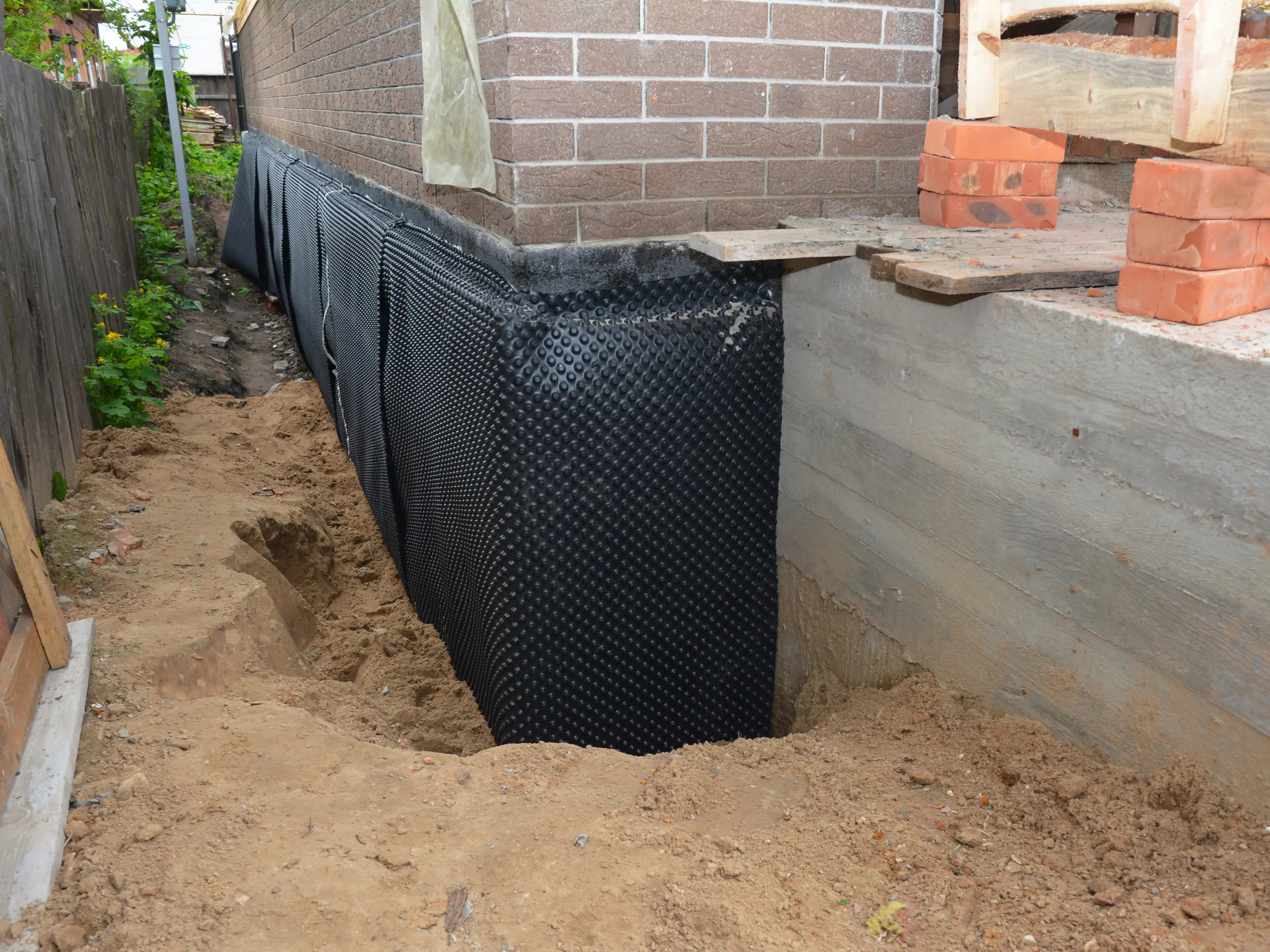
Professional basement waterproofing in MA can address moisture problems by identifying how water is reaching the foundation and determining the appropriate waterproofing or drainage solution.
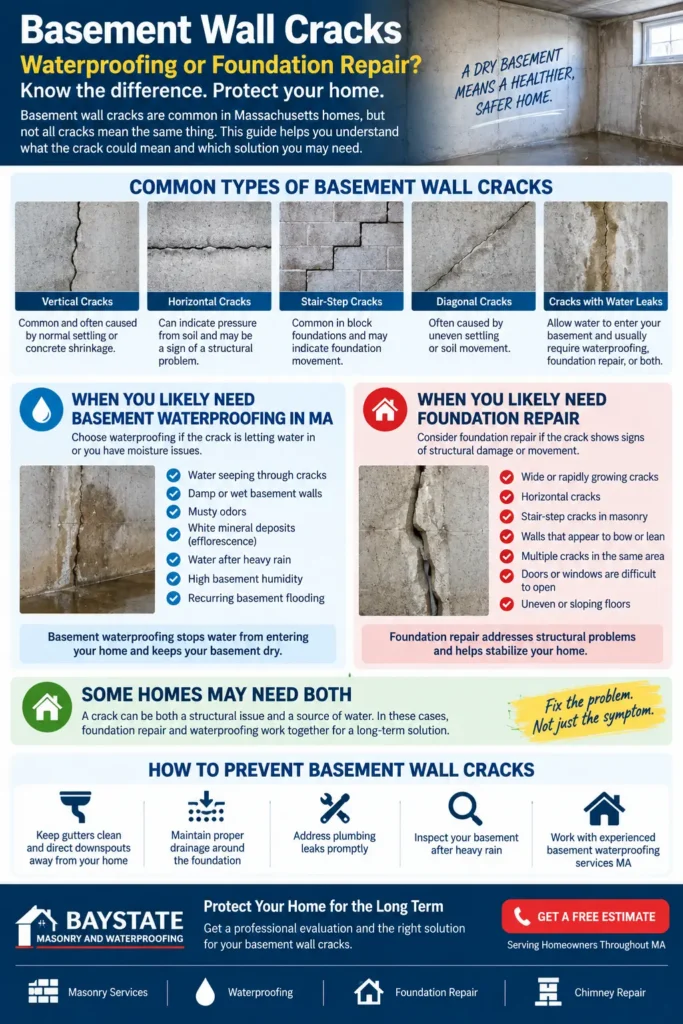
Signs that waterproofing may be needed include:
- Water seeping through basement wall cracks
- Damp or wet areas around foundation walls
- Water appearing after heavy rain
- Persistent basement humidity
- Musty odors
- Efflorescence or white mineral deposits
- Recurring water stains
- Basement flooding or pooling water
However, waterproofing should not be used as a substitute for structural repairs when the foundation itself has significant damage.
When Do Basement Wall Cracks Require Foundation Repair?
Some cracks can indicate movement or structural deterioration rather than simply a moisture problem.
A professional foundation evaluation may be appropriate when you notice:
- Wide or rapidly growing cracks
- Horizontal cracks in foundation walls
- Stair-step cracks in masonry
- Significant vertical displacement
- Walls that appear to bow or lean
- Multiple cracks developing in the same area
- Doors or windows that suddenly become difficult to open
- Uneven floors associated with foundation movement
Horizontal cracks can be particularly important because they may be associated with pressure from surrounding soil. A qualified contractor should evaluate significant or changing cracks to determine whether structural reinforcement or another foundation repair is necessary.
Not every crack means your home has a major structural problem. The location, size, direction, age, and progression of the crack all matter.
Waterproofing vs. Foundation Repair: What’s the Difference?
Although basement waterproofing and foundation repair can overlap, they address different problems.
Basement waterproofing focuses primarily on controlling moisture and preventing water from entering or accumulating in the basement.
Depending on the property, waterproofing work may involve drainage improvements, interior or exterior waterproofing methods, sump pump systems, crack sealing, or other moisture-control measures.
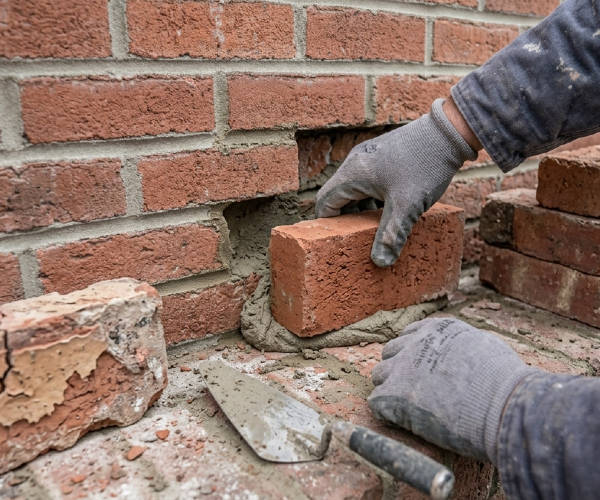
Foundation repair focuses on structural problems affecting the foundation. Depending on the cause and severity, repairs may involve masonry restoration, reinforcement, stabilization, or other structural solutions.
In some situations, a homeowner may need both.
For example, a foundation wall could have a structural crack that is also allowing water into the basement. Repairing the structural issue addresses the foundation problem, while waterproofing and drainage improvements can help reduce future water intrusion.
How to Tell If a Crack Is Getting Worse
One of the most useful things homeowners can do is pay attention to changes over time.
A small crack that remains stable may be less concerning than one that continues to widen or develop additional signs of movement.
Look for changes such as:
- The crack becoming wider
- New cracks appearing nearby
- Water beginning to seep through the crack
- Rust or staining around the area
- Pieces of concrete or masonry breaking away
- The wall beginning to bow
- Changes in doors, windows, or floors
If you notice progression, documenting the crack with photographs and having it evaluated can help determine the appropriate next step.
Can Basement Wall Cracks Be Prevented?
Not every foundation crack can be prevented, but good drainage and regular maintenance can reduce some common causes of basement moisture.
Homeowners should:
- Keep gutters clean and functioning properly
- Direct downspouts away from the foundation
- Maintain positive drainage around the home
- Address plumbing or drainage leaks promptly
- Monitor existing foundation cracks
- Inspect the basement after periods of heavy rain
- Address water intrusion before it becomes persistent
For older Massachusetts homes, regular attention can be especially valuable because years of moisture exposure and seasonal weather can contribute to masonry and foundation deterioration.
Choosing Basement Waterproofing Services in MA
If your basement has recurring moisture or water entering through wall cracks, choosing the right contractor is important.
Look for a contractor who can evaluate both the water problem and the condition of the foundation rather than simply applying a surface coating to the visible crack.
A professional assessment should consider:
- Where the water is coming from
- Whether groundwater pressure is involved
- The condition of the foundation
- Drainage around the property
- The type and severity of the crack
- Whether structural repairs are necessary
Experienced basement waterproofing services MA can help homeowners understand their options and determine which approach is appropriate for their property.
Frequently Asked Questions
Are all basement wall cracks serious?
No. Some small cracks can result from normal concrete shrinkage or minor movement. However, wide, horizontal, growing, or displaced cracks should be professionally evaluated.
Can waterproofing fix foundation cracks?
Waterproofing can help address water intrusion through certain cracks, but it does not necessarily correct an underlying structural problem. Structural cracks may require foundation repair in addition to waterproofing.
Should I worry about horizontal basement wall cracks?
Horizontal cracks can be more concerning because they may be associated with soil pressure against the foundation wall. Have significant or changing horizontal cracks evaluated by a qualified professional.
Why does my basement leak only after heavy rain?
Heavy rainfall can increase groundwater and soil pressure around the foundation. Water may then enter through cracks, joints, porous masonry, or other vulnerable areas.
How much does basement waterproofing cost in Massachusetts?
The cost varies depending on the size and condition of the basement, source of water, drainage conditions, foundation type, and waterproofing method required. A property-specific evaluation is the best way to determine the appropriate solution.
Need Help With Basement Wall Cracks?
Basement wall cracks should not automatically be treated as either a waterproofing problem or a foundation problem. The right solution depends on what is causing the crack and whether water intrusion, structural movement, or both are involved.
Baystate Masonry and Waterproofing provides professional basement waterproofing services MA homeowners can rely on for moisture and foundation-related concerns. If you are seeing cracks, water stains, seepage, or recurring basement moisture, contact Baystate Masonry and Waterproofing to schedule an evaluation and find the right solution for your home.