Massachusetts winters can be tough on exterior masonry. Freezing temperatures, snow, ice, moisture, and repeated freeze-thaw cycles can gradually damage brick, stone, and mortar. Small cracks or deteriorating joints may seem minor at first, but moisture can enter these openings and contribute to more extensive masonry damage over time.
Understanding how winter weather affects masonry can help homeowners identify problems early and determine when professional masonry contractors should inspect the property.
How Masonry Contractors Assess Winter Masonry Damage
A proper masonry evaluation should begin with an inspection rather than simply repairing the most visible damage. Experienced masonry contractors look at the condition of the brick, stone, and mortar and consider where moisture may be entering.
During an inspection, a contractor may look for:
- Cracked or broken bricks
- Spalling or flaking surfaces
- Crumbling mortar joints
- Loose or displaced masonry
- Water stains or moisture intrusion
- Gaps around masonry openings
- Previous repairs that have deteriorated
The location and pattern of damage can also provide clues about the underlying cause.
Why Freeze-Thaw Cycles Damage Masonry
One of the biggest winter concerns for Massachusetts masonry is the freeze-thaw cycle.
When water enters porous brick, stone, or mortar, freezing temperatures can cause that moisture to expand. As temperatures rise, the ice melts. Repeated cycles of freezing and thawing can gradually put stress on masonry materials.
Over time, this may contribute to cracking, spalling, deteriorating mortar, and other forms of masonry deterioration.
This is why addressing water entry and damaged mortar can be an important part of protecting masonry before winter damage becomes more extensive.
Common Winter Masonry Problems in Massachusetts
Crumbling Mortar
Mortar joints can deteriorate when exposed to prolonged moisture and repeated temperature changes. Missing or weakened mortar can allow additional water to enter the masonry assembly.
Spalling Brick
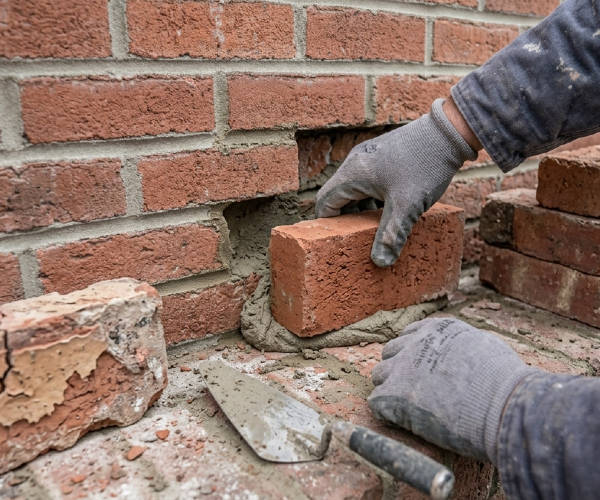
Spalling occurs when the surface of a brick begins to flake, chip, or break away. Moisture penetration and freeze-thaw exposure can contribute to this type of deterioration.
Cracked Stone
Natural stone can also develop cracks or surface damage when exposed to moisture and repeated temperature fluctuations. The severity depends on the type of stone and its condition.
Water Intrusion
Damaged mortar joints, cracks, and openings around masonry can create pathways for water. Persistent moisture can affect both exterior masonry and areas behind or adjacent to it.
How to Protect Brick, Stone & Mortar Before Winter
Homeowners can reduce potential problems by addressing visible masonry deterioration before severe winter weather arrives.
A professional evaluation may identify areas that need:
- Mortar repair or repointing
- Brick replacement
- Masonry restoration
- Crack repair
- Waterproofing
- Improved drainage
- Sealing or other appropriate maintenance
The correct solution depends on the material, extent of deterioration, and source of the moisture.
When Should You Call Masonry Contractors?
Not every crack requires extensive repair, but recurring or worsening damage should not be ignored. Consider contacting masonry contractors if you notice loose bricks, significant mortar deterioration, recurring cracks, spalling, water intrusion, or sections of masonry that appear to be moving.
A professional assessment can help determine whether localized repair is sufficient or whether more extensive masonry restoration is needed.
When choosing a contractor, look for relevant experience with brick, stone, and mortar, appropriate insurance, clear estimates, and examples of similar work. A qualified professional should be able to explain the cause of the damage and why a particular repair is recommended.
Protect Your Masonry With Baystate Masonry and Waterproofing
At Baystate Masonry and Waterproofing, we understand that Massachusetts weather can place significant demands on exterior masonry. Our team evaluates masonry concerns and provides practical solutions based on the condition of the property.
Whether you’re dealing with cracked brick, deteriorating mortar, spalling, or moisture-related damage, addressing the issue early can help protect your property and reduce the potential for more extensive repairs.